Wire Bonder Platen
Context
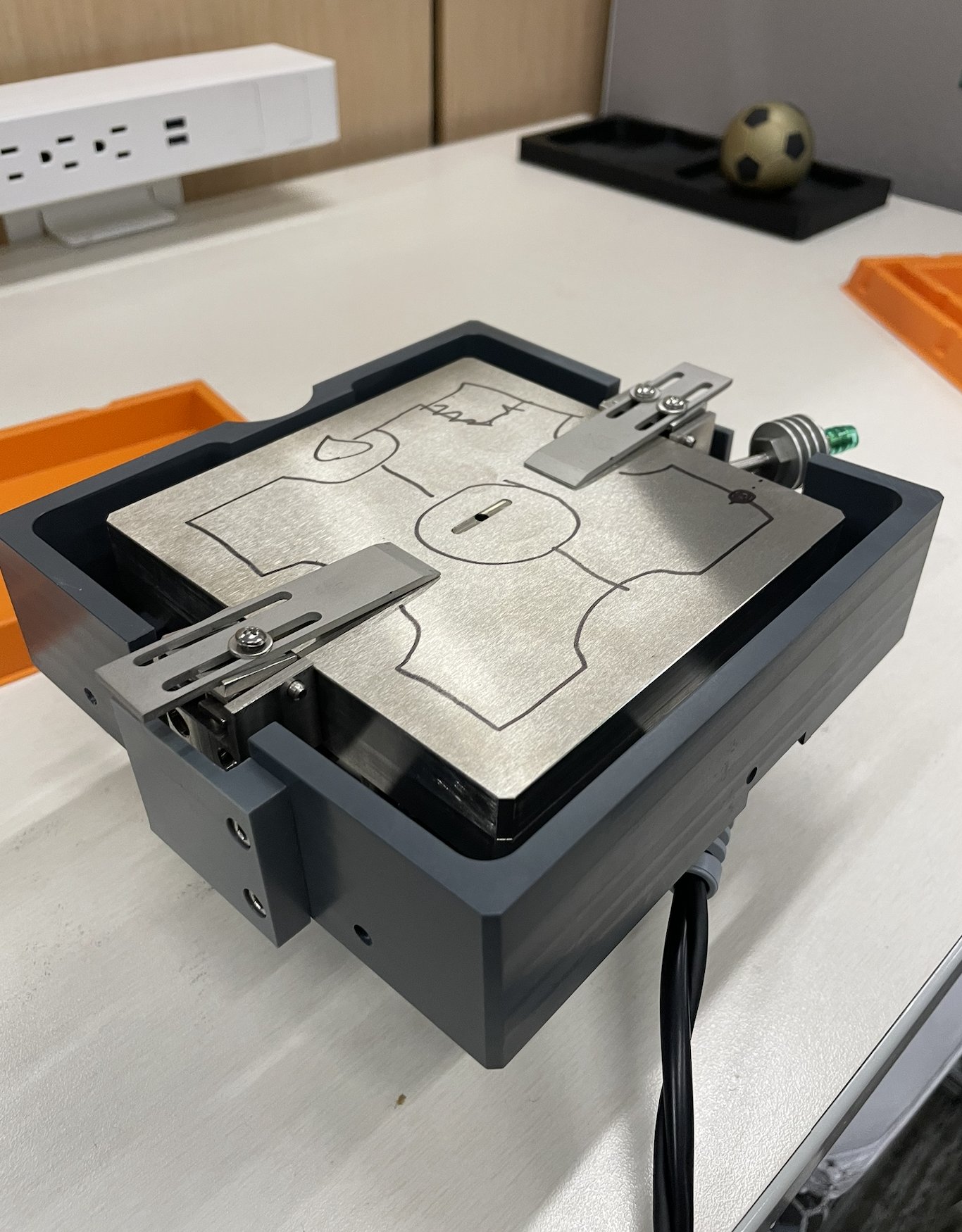
Samtec's Glass Core Technology (GCT) replaces traditional PCB substrates with engineered glass to build high-density microelectronic packaging. At the time, the GCT group at Samtec's Indiana headquarters did not have wafer dicing capability on site. To validate the shear strength of ball wire bonds, sample dies had to be diced at Samtec's Colorado facility and shipped back and forth between Indiana and Colorado. This round-trip added cost, handling, and delay, and it slowed process development on new products. To speed up turnaround, I designed a new vacuum platen that refit the existing IBonder5000 ball wire bonder to hold full 6″ wafers, so bonding and shear testing could be done in house on whole wafers with no dicing required.
Content
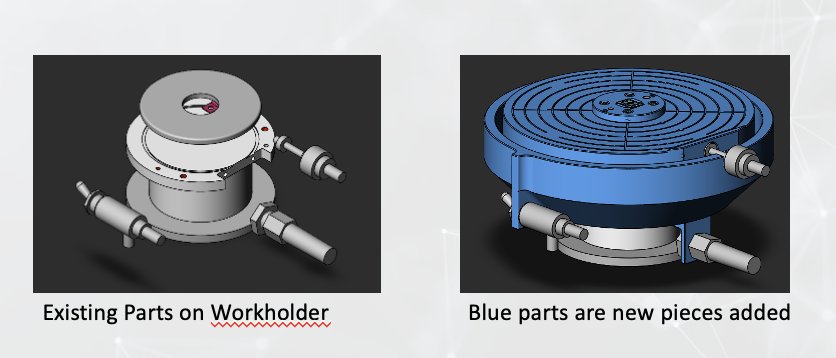
The existing wire bonder could only hold individual dies, so I evaluated three ways to add full wafer capability. Replacing the entire workholder was the most expensive option. Adding a 6″ platform on top of the existing platen was cheaper, but stacking a second layer risked worse heating uniformity across the wafer and reduced flatness. Replacing the vacuum platen itself avoided both problems. It reused the machine's existing heating element and interfaces, kept the bond surface flat and directly heated, and cost far less than a full workholder replacement, so that is the option I chose.
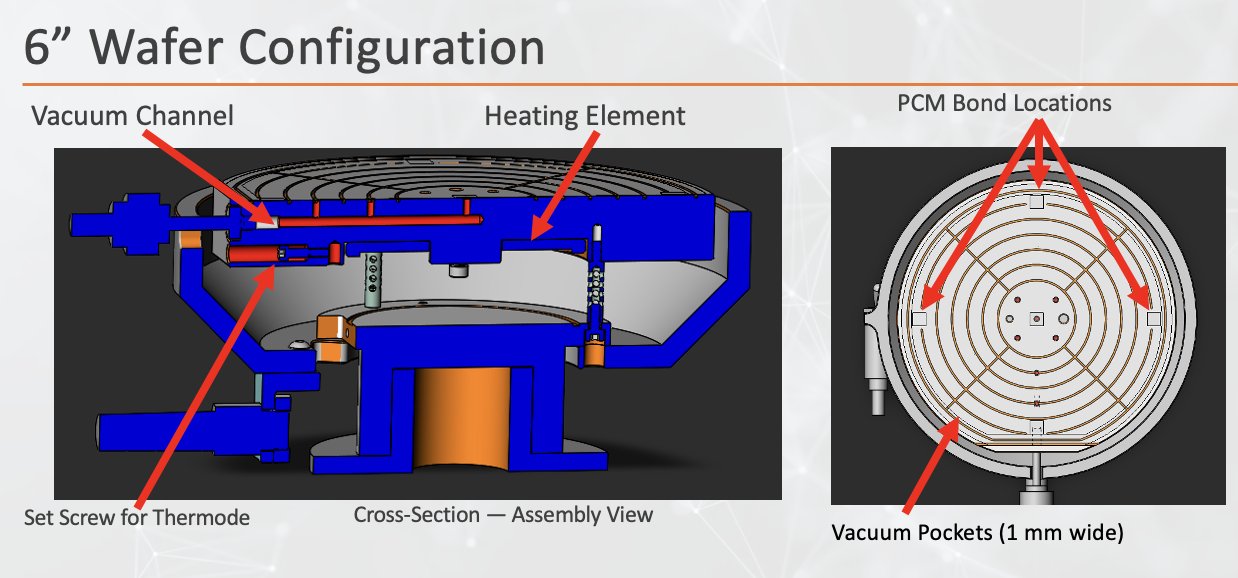
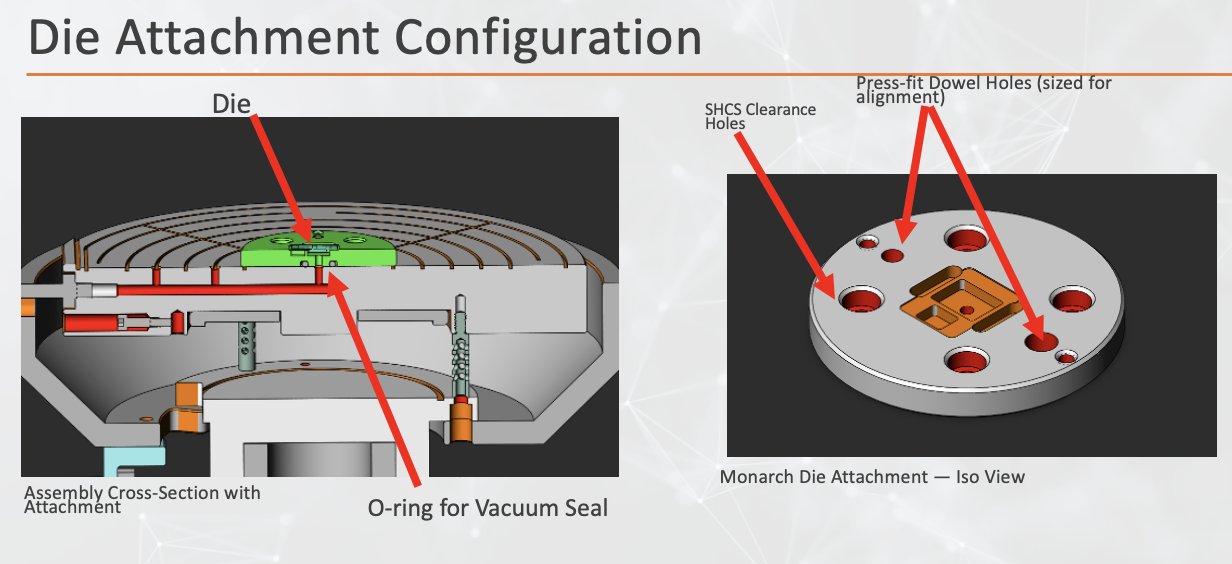
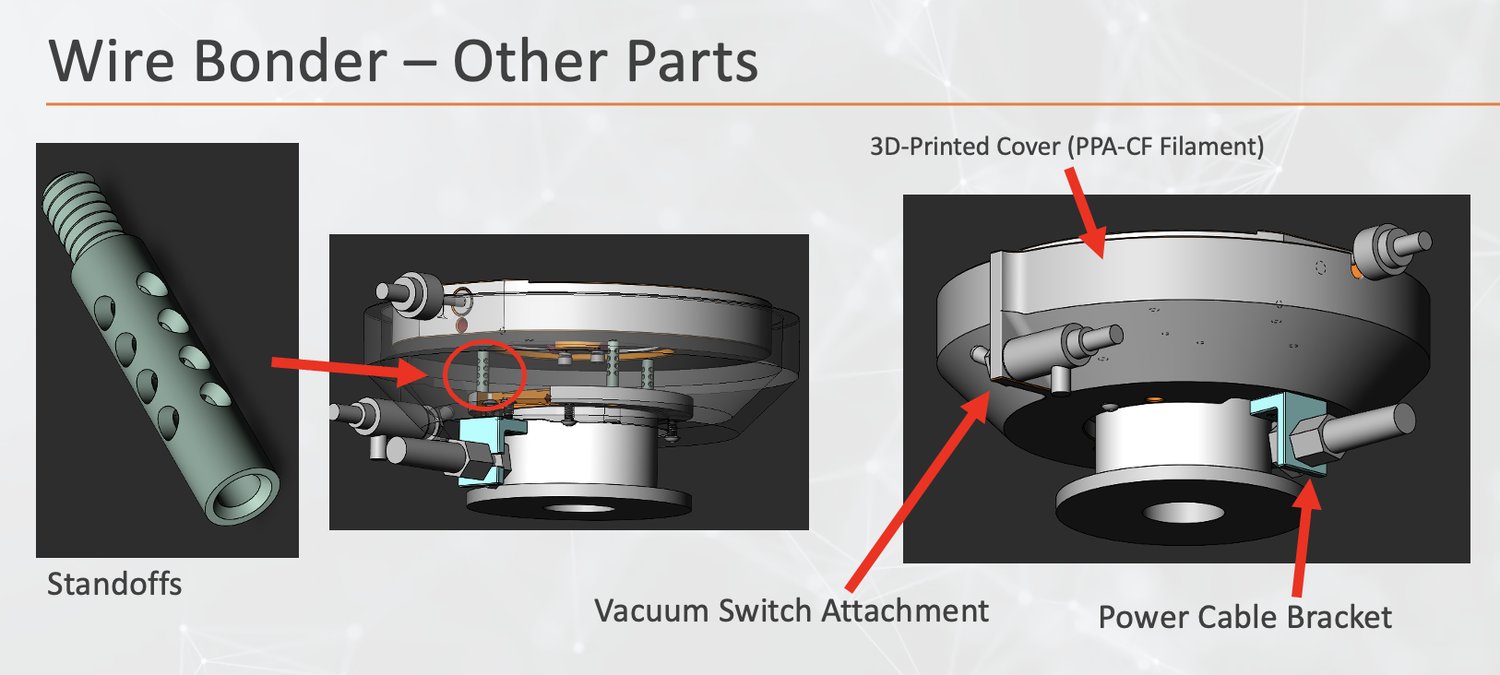
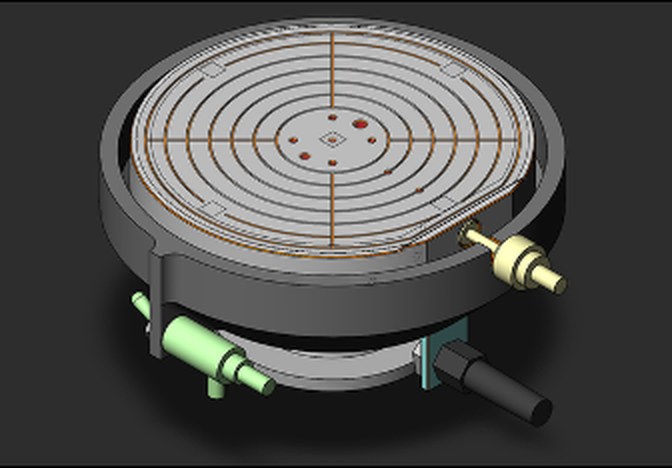
The platen holds a 6″ glass wafer using a network of thin vacuum channels. For products that still require single die testing, I designed an interchangeable die attachment that mounts to the same platen, sealed with an O-ring vacuum seal and located with press fit dowels. I modeled everything in SolidWorks and applied GD&T and tolerancing, for example holding the dowel holes a few tenths under nominal for the press fit and a few tenths over for clearance fits. I also designed the supporting hardware, including standoffs, a 3D printed cover in PPA-CF filament, a power cable bracket, and a vacuum switch mount.
Conclusions
The parts are currently being quoted and ordered for fabrication. The next steps are to install and qualify the platen and die attachment on the IBonder5000, then build out additional die specific plate attachments for other products. Once running, the refit keeps full wafer bonding and shear testing on site, shortening the feedback loop and speeding up the process characterization that previously depended on shipping samples between states.